What paper does better
It costs less per card, and it can be read without a phone, a battery or a network. If you hand out dozens of cards at a trade fair, paper is still the practical choice.
What the NFC card does better
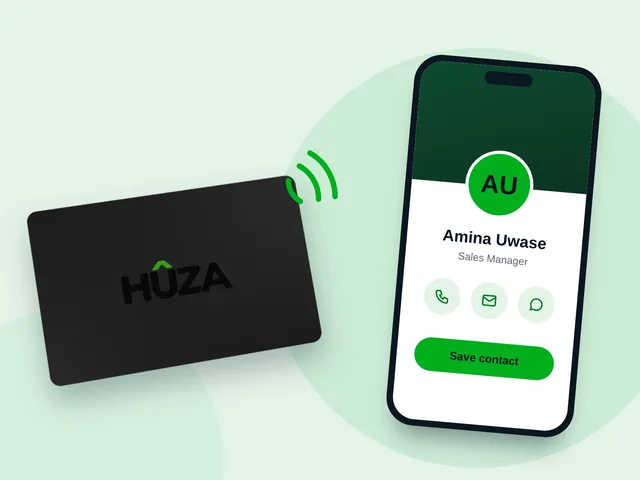
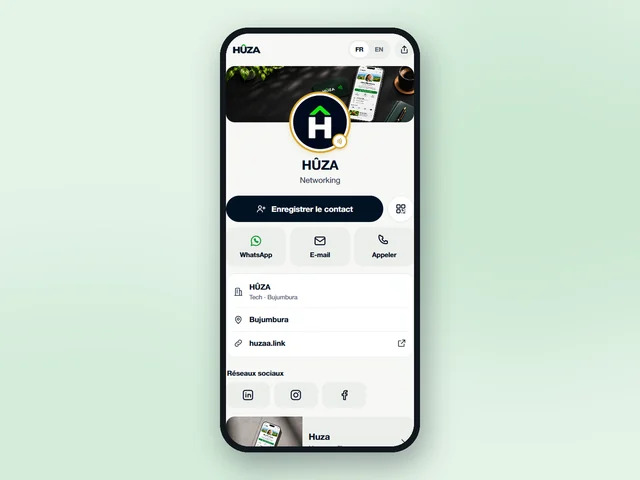
Your contact has nothing to copy down. They hold their phone to the card and your details are saved. Your profile can also carry a WhatsApp button, your catalogue or your location, which a printed card cannot.
When a number changes, you update the profile and reprint nothing. And a card in PVC, bamboo or metal lasts for years, where paper bends and gets dirty.
| Feature | Paper card | NFC card |
|---|---|---|
| Price per card | Lower | Higher |
| New number or job title | Reprint | Update the profile (instantly) |
| What your contact gets | Text to copy down | A saved contact in one tap |
| Links, WhatsApp, catalogue | Limited by space | All on the profile |
| Needs a phone | No | Yes, with a QR code as backup |
| Lifespan | Wears out quickly | Several years |
So which one?
If you meet clients every week and your details change, the NFC card will save you time. If you give lots of cards to strangers, paper still makes sense. Nothing stops you from keeping both: the NFC card for meetings that matter, paper for the rest.